The purchase price of an electric car in Poland is, in most cases, higher than that of a comparable petrol or diesel model. This is well known. What receives less attention is how that gap looks over three to five years when fuel, maintenance, and tax costs are included. This article works through the key cost categories to give a more complete picture of what EV ownership actually costs Polish drivers in 2024–2025.
Purchase price
The entry point for a new battery-electric vehicle (BEV) in Poland in early 2025 is the Dacia Spring at approximately 75,000–82,000 PLN depending on trim. From there, the most commonly registered BEVs span a wide range:
| Model | Starting price (PLN) | WLTP range | Battery |
|---|---|---|---|
| Dacia Spring Electric 65 | ~78,000 | 225 km | 26.8 kWh |
| Volkswagen ID.3 Pure | ~149,000 | 352 km | 45 kWh |
| Kia Niro EV | ~168,000 | 463 km | 64.8 kWh |
| Hyundai IONIQ 5 Standard Range | ~185,000 | 384 km | 53 kWh |
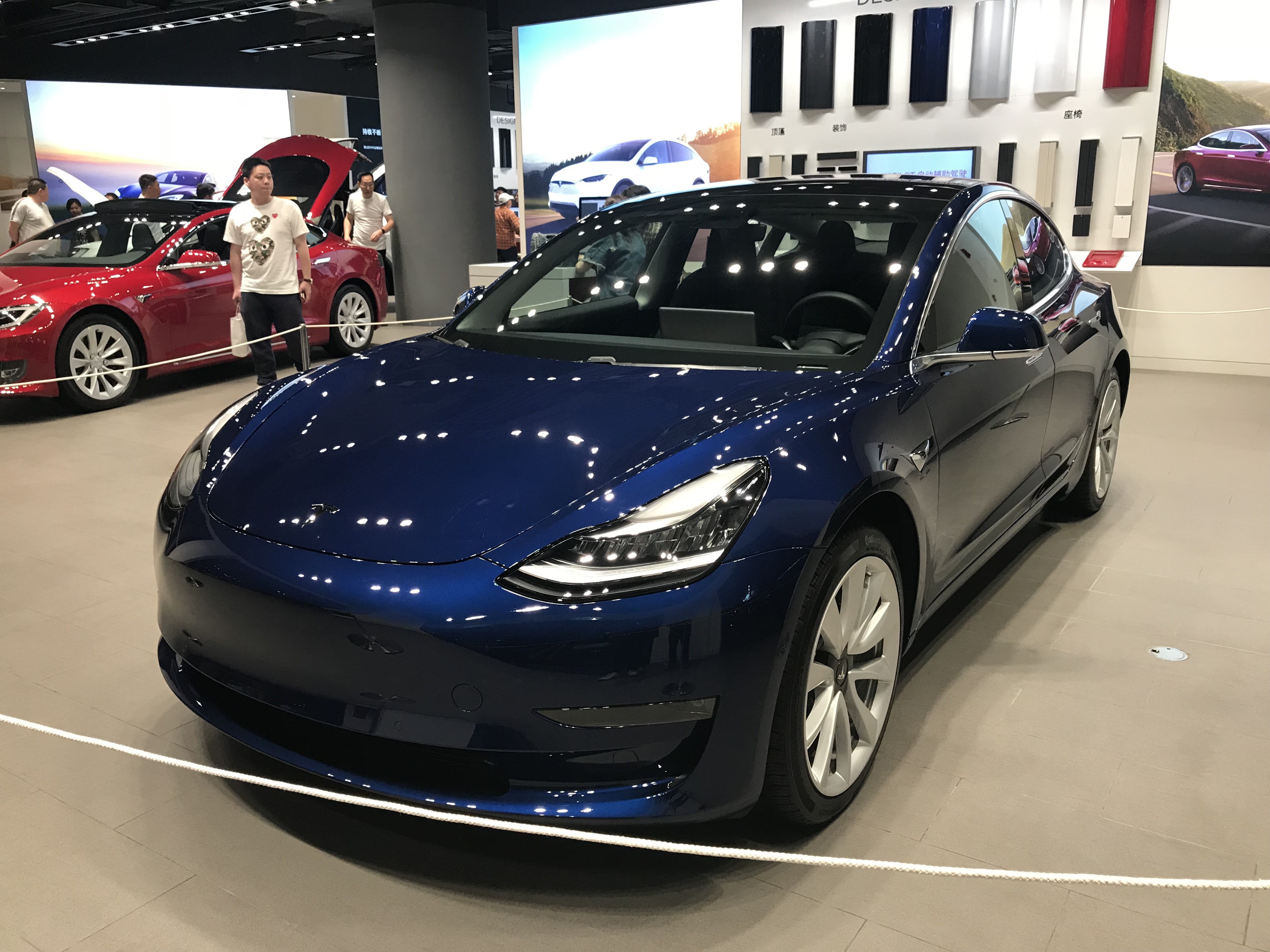
| Tesla Model 3 RWD | ~200,000 | 554 km | 57.5 kWh |
| Polestar 2 Single Motor | ~208,000 | 655 km | 69 kWh |
| Audi Q8 e-tron 50 | ~340,000 | 491 km | 89 kWh |
By comparison, a petrol family hatchback in the same practical class as the VW ID.3 — such as the Volkswagen Golf 1.5 eTSI — starts around 110,000–120,000 PLN in Poland. The purchase price gap for comparable models was 30,000–40,000 PLN in the hatchback segment in early 2025.
Subsidies and tax incentives
Poland's Mój Elektryk programme (administered by NFOŚiGW) provides subsidies for BEV purchases. The key terms active as of early 2025:
- Up to 27,000 PLN for a new BEV with a net price under 225,000 PLN
- An additional 9,000 PLN for households with the Karta Dużej Rodziny (Large Family Card)
- A leasing pathway for company vehicles with equivalent subsidy structure
These subsidies meaningfully reduce the effective purchase price for vehicles in the 140,000–220,000 PLN range. The Dacia Spring does not qualify under current price caps for full subsidy in some programme iterations — check current NFOŚiGW terms for up-to-date eligibility. The programme has been modified multiple times since its 2021 launch.

Fuel and electricity costs
This is where EVs recover ground against petrol vehicles. The calculation depends heavily on whether you charge mainly at home or primarily at public stations.
Home charging
Average household electricity price in Poland in early 2025: approximately 0.75–0.85 PLN/kWh (G11 tariff). On an off-peak G12 tariff, nighttime rates fall to approximately 0.50–0.60 PLN/kWh.
For a car consuming 17 kWh/100 km (a reasonable real-world figure for a mid-size BEV such as the VW ID.3 or Kia Niro EV):
- Cost per 100 km (G11 tariff): ~13–14 PLN
- Cost per 100 km (off-peak G12): ~8.5–10 PLN
A petrol car consuming 7 l/100 km at a pump price of 6.20 PLN/l costs approximately 43 PLN/100 km in fuel alone. The electricity advantage over 15,000 km per year amounts to roughly 4,000–5,000 PLN annually when home charging on G12.
Public charging
Public AC charging in Poland (22 kW stations): typically 1.20–1.80 PLN/kWh depending on operator and location. DC fast charging: 1.80–3.00 PLN/kWh, with ultra-fast Ionity stalls reaching up to 3.50 PLN/kWh for ad-hoc users.
A driver who exclusively uses public DC fast chargers will pay 30–51 PLN/100 km — comparable to or worse than petrol. The cost advantage of EV ownership depends substantially on having access to home or workplace AC charging.
Maintenance costs
Electric vehicles have significantly fewer moving parts than combustion-engine cars. The most notable cost reductions:
- No engine oil changes (typically 400–600 PLN per service for a petrol car)
- No exhaust system maintenance
- No timing belt or chain service
- Regenerative braking reduces brake pad and disc wear significantly
- No spark plugs, no air filter for the engine
EV maintenance costs in Poland are typically 30–50% lower than comparable petrol vehicles over 5 years of ownership, according to fleet cost analyses from major Polish automotive leasing companies.
Areas where EV costs are higher or similar:
- Tyre wear: EVs are heavier than petrol equivalents, and torque delivery can accelerate rear tyre wear. Budget for tyre replacement every 30,000–40,000 km.
- Windscreen and cabin air filter replacement: same as combustion cars
- Battery warranty monitoring: most manufacturers cover battery to 70% state of health over 8 years / 160,000 km

Insurance
Third-party liability (OC) insurance in Poland is mandatory and calculated on a risk-scoring basis that does not currently heavily differentiate between EV and petrol vehicles in the same class. For popular mid-size BEVs, OC premiums in 2024–2025 ranged from approximately 800 to 1,800 PLN annually depending on driver history and region.
Comprehensive (AC) insurance is more noticeably higher for EVs, primarily because repair costs — particularly for battery damage or high-voltage system work — are greater. A comprehensive policy for a Tesla Model 3 or Kia Niro EV typically runs 3,000–5,500 PLN per year from major Polish insurers, compared to 2,000–3,500 PLN for a petrol equivalent in the same class.
Total cost of ownership: an illustrative comparison
Over 5 years / 75,000 km, comparing a Kia Niro EV (post-subsidy price ~141,000 PLN) to a Kia Niro HEV petrol hybrid (~140,000 PLN at a similar trim level):
| Category | Kia Niro EV | Kia Niro HEV (petrol) |
|---|---|---|
| Purchase (after subsidy) | 141,000 PLN | 140,000 PLN |
| Fuel / electricity (5 yr) | ~7,500 PLN | ~32,000 PLN |
| Maintenance (5 yr) | ~3,000 PLN | ~7,500 PLN |
| Insurance (5 yr) | ~20,000 PLN | ~14,000 PLN |
| Approximate total | ~171,500 PLN | ~193,500 PLN |
This comparison assumes predominantly home charging on G12 tariff. The EV's 5-year running cost advantage of approximately 22,000 PLN is driven mainly by the fuel cost difference and lower maintenance. It narrows or disappears if the driver relies heavily on public fast charging.
Residual value
Resale values for EVs in Poland are harder to predict than for petrol cars because the market is younger and battery health assessment is not yet standardised in the used-car trade. Models from established brands (Kia, Hyundai, Volkswagen) have shown relatively stable 3-year residuals of 55–65% of original list price. Older single-model EVs from the 2016–2019 generation (first-gen Nissan Leaf, Renault Zoe pre-facelift) have depreciated more steeply, partly due to battery degradation concerns.
Battery health certification — similar to carfax in the USA — is becoming more common through independent tools such as Recurrent and via manufacturer diagnostics reports, which can support higher asking prices for used EVs in good battery condition.
Summary
The economics of EV ownership in Poland in 2025 are favourable for buyers who have access to home charging and plan to keep the vehicle for at least 3–4 years. The purchase premium over a petrol equivalent is offset by lower fuel and maintenance costs, and is further reduced by the Mój Elektryk subsidy where applicable. The break-even point arrives later for drivers who rely primarily on public fast charging, and later still for those in the premium segment where insurance costs are highest.

